

How To Choose Toddler Plates
Between the flying peas and the sudden interest in seeing if a plate can fly across the kitchen, mealtime with a toddler can feel less like a peaceful family moment and more like a high-stakes physics experiment. We want our kids to eat well, but we also want gear that won't crack when it hits the floor or leach chemicals into their pasta. Finding that sweet spot between "toddler-proof" and "parent-approved" is the name of the game.
Quick Answer
To ensure easy maintenance and safety, look for 304 (18/8) grade stainless steel or food-grade silicone, as these materials are durable and easy to sanitize. For toddlers, divided plates help manage picky eating, while suction bases prevent the constant cycle of picking up dropped dishes from the floor.
Table of Contents
Our Top Picks
Affiliate disclosure: if you buy through these links, we may earn a commission at no extra cost to you.


Material Integrity: Safety First
When you're looking at toddler plates, the color might catch your eye, but the material is what actually matters for your peace of mind. You want materials that are chemically inert, meaning they won't react with food or leach substances into your child's meal. This is especially important for the little ones who might still be exploring textures or putting things in their mouths.
One of the gold standards for durability and safety is 304 (18/8) grade stainless steel. It is chemically inert, meaning it won't leach, absorb odors, or harbor bacteria. For even better maintenance, look for electro-polished stainless steel surfaces. These surfaces eliminate micro-pores that can trap food residue or create a metallic taste, making them much easier to keep hygienic.
Design Features for Picky Eaters
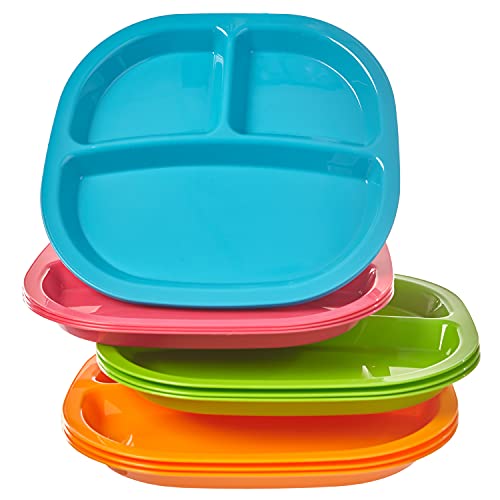
If your toddler treats different food groups touching each other like a personal insult, you aren't alone. Design plays a massive role in whether a meal is a success or a meltdown. Divided plates are a lifesaver for many parents because they provide clear boundaries for different food groups.
According to dietitian Paige Balluck, separated compartments can feel less overwhelming to toddlers who are struggling with picky eating. By keeping the peas away from the pasta, you reduce the sensory overwhelm that often leads to mealtime battles. This design also makes it easier for parents to ensure a balanced meal is being served in a visually organized way.
Suction vs. Stability
The "plate-launching" phase is a common milestone in toddlerhood. To combat the constant cycle of picking up dishes from the floor, suction-based plates are a popular choice. These are designed to stick firmly to highchair trays or tables, allowing the child to scoop and push without the plate sliding away or flipping over.
While suction is great for the early self-feeding stages, keep in mind that as kids get older and more determined, they may learn to peel them up. For older toddlers, look for heavy-duty silicone sleeves or weighted bases that provide stability without the need for a vacuum seal. The goal is to find a balance between a plate that stays put and one that is easy to remove for cleaning.
Maintenance and Longevity
Maintenance is where the "real world" meets the product specs. You want something that can survive the dishwasher, but you also need to consider how the material holds up over time. While food-grade silicone is BPA- and phthalate-free, it can be more porous than stainless steel, meaning it might absorb the smell of strong detergents or certain foods over time.
Stainless steel is generally the champion of longevity. It is incredibly tough and can handle being dropped repeatedly. When choosing between materials, consider your own household habits: if you rely heavily on the dishwasher, ensure the material is rated for high-heat cycles. Always check if the product is truly dishwasher-safe or if it requires handwashing to prevent warping or degradation.
Frequently Asked Questions
Is stainless steel safe for toddlers?
Yes, 304 (18/8) grade stainless steel is a highly safe, chemically inert option that won't leach or harbor bacteria.
Why should I avoid some bamboo plates?
Some bamboo products are actually bamboo fiber mixed with melamine resin, which can leach chemicals when heated.
Do divided plates help with picky eating?
Yes, they can make meals feel less overwhelming by keeping different foods from touching.
What is the benefit of electro-polished steel?
Electro-polished surfaces eliminate micro-pores, preventing food residue from getting trapped and reducing metallic tastes.
Are silicone plates easy to clean?
They are generally easy to clean, but because they are more porous than steel, they may absorb food odors over time.
Choosing the right toddler plate is about balancing safety, durability, and the reality of messy mealtimes. By focusing on high-quality materials like stainless steel and practical designs like divided compartments, you can turn mealtime from a struggle into a manageable routine. Now that you know what to look for, take a look at your current cabinets and see if it's time for an upgrade!


